PHASE 1
Professional Speaking Foundations
Weeks 1–4 · Sessions 1–8
Build confidence, conversational control, intelligible pronunciation, and an appropriate professional tone.
Week 1 · Session 1 | Orientation and Spoken Diagnostic
Learning objective: Build rapport; explain expectations; establish a baseline.
Language and skills: Professional introductions; needs analysis; fluency sample; course routines.
Main performance task: Diagnostic interview and one-minute introduction.
Week 1 · Session 2 | Confident Professional Introductions
Learning objective: Introduce oneself, one’s role, and organisation clearly.
Language and skills: Names, roles, responsibilities, expertise, professional interests; follow-up questions.
Main performance task: Networking carousel and revised elevator introduction.
Week 2 · Session 3 | Conversation Foundations
Learning objective: Start, maintain, and close professional conversations.
Language and skills: Openers, small talk, transitions, follow-up questions, active listening signals.
Main performance task: Virtual networking event simulation.
Week 2 · Session 4 | Asking Effective Questions
Learning objective: Use accurate, purposeful questions to obtain information.
Language and skills: Open/closed questions; probing; checking; indirect and polite questions.
Main performance task: Information-gap interview and clarification challenge.
Week 3 · Session 5 | Fluency and Communication Repair
Learning objective: Keep speaking despite gaps or uncertainty.
Language and skills: Fillers, paraphrasing, circumlocution, self-correction, asking for repetition.
Main performance task: Timed speaking rounds and taboo-style paraphrase task.
Week 3 · Session 6 | Pronunciation for Intelligibility I
Learning objective: Produce clearer key sounds and word endings.
Language and skills: High-impact consonants/vowels; final sounds; contractions; individual problem sounds.
Main performance task: Minimal-pair practice and personalised pronunciation recording.
Week 4 · Session 7 | Pronunciation for Intelligibility II
Learning objective: Use stress and pausing to make meaning clearer.
Language and skills: Word stress, sentence stress, thought groups, rhythm, linking, pausing.
Main performance task: Mark-and-deliver a short workplace update.
Week 4 · Session 8 | Tone, Intonation, and Professional Politeness
Learning objective: Adjust spoken tone for purpose and relationship.
Language and skills: Intonation; direct vs diplomatic language; formal, neutral, and friendly tone.
Main performance task: Deliver the same message to three different audiences.
PHASE 2
Clear Workplace Communication
Weeks 5–7 · Sessions 9–14
Explain roles, processes, progress, data, and remote communication clearly and efficiently.
Week 5 · Session 9 | Describing Roles and Responsibilities
Learning objective: Explain duties, routines, and collaboration accurately.
Language and skills: Responsibilities, reporting lines, frequency, current priorities, handovers.
Main performance task: Role interview and team-map explanation.
Week 5 · Session 10 | Explaining Processes and Giving Instructions
Learning objective: Present steps in a logical, listener-friendly order.
Language and skills: Sequencing, signposting, imperatives, checking understanding, safety emphasis.
Main performance task: Teach a workplace process to a partner.
Week 6 · Session 11 | Reporting Progress and Giving Updates
Learning objective: Give concise status reports and identify next steps.
Language and skills: Completed work, current activity, delays, causes, deadlines, support needed.
Main performance task: Two-minute stand-up meeting simulation.
Week 6 · Session 12 | Talking About Data and Trends
Learning objective: Explain simple figures, changes, and comparisons orally.
Language and skills: Increase/decrease; stability; comparison; approximation; cautious interpretation.
Main performance task: Brief an audience using a simple chart or dashboard.
Week 7 · Session 13 | Telephone Communication
Learning objective: Handle professional calls without visual cues.
Language and skills: Opening/closing calls; identifying; transferring; taking messages; confirming details.
Main performance task: Back-to-back telephone role-plays.
Week 7 · Session 14 | Video-Conference Communication
Learning objective: Participate effectively in online workplace interaction.
Language and skills: Audio checks; entry/exit language; screen-sharing talk; lag; clarification; online etiquette.
Main performance task: Technical-problem and remote-collaboration simulation.
PHASE 3
Meetings and Collaborative Discussion
Weeks 8–9 · Sessions 15–18
Participate actively in meetings, manage turns, clarify meaning, summarise decisions, and demonstrate integrated meeting skills.
Week 8 · Session 15 | Meetings I: Entering and Managing Discussion
Learning objective: Contribute ideas and manage turns professionally.
Language and skills: Agenda language; introducing points; turn-taking; interruption; inviting contributions.
Main performance task: Short team meeting with rotating chair.
Week 8 · Session 16 | Meetings II: Opinions, Agreement, and Disagreement
Learning objective: Express positions and respond diplomatically.
Language and skills: Opinion frames; partial agreement; respectful disagreement; evidence; consensus.
Main performance task: Decision meeting on a workplace scenario.
Week 9 · Session 17 | Meetings III: Clarifying and Summarising
Learning objective: Prevent misunderstanding and confirm decisions.
Language and skills: Clarifying meaning; checking assumptions; summarising; action points; responsibilities.
Main performance task: Ambiguous-instructions meeting challenge.
Week 9 · Session 18 | Mid-Course Meeting Simulation
Learning objective: Integrate meeting, listening, and interaction skills.
Language and skills: Agenda management; discussion; problem solving; decision and oral summary.
Main performance task: Assessed group meeting with individual feedback.
PHASE 4
Requests, Conflict, Problem Solving, and Negotiation
Weeks 10–12 · Sessions 19–24
Handle sensitive workplace interaction with diplomacy, structure, and practical problem-solving language.
Week 10 · Session 19 | Requests, Offers, and Permission
Learning objective: Make requests and respond with suitable levels of politeness.
Language and skills: Directness; modal language; reasons; conditions; accepting/refusing; alternatives.
Main performance task: Request ladder and manager–employee role-play.
Week 10 · Session 20 | Complaints and Service Recovery
Learning objective: Handle dissatisfaction calmly and constructively.
Language and skills: Acknowledging; apologising; questioning; explaining; offering solutions; closing.
Main performance task: Client complaint and service-recovery simulation.
Week 11 · Session 21 | Giving and Receiving Feedback
Learning objective: Deliver specific feedback and respond without defensiveness.
Language and skills: Positive feedback; constructive critique; examples; suggestions; clarification; action.
Main performance task: Peer coaching conversation using a structured model.
Week 11 · Session 22 | Difficult Conversations and Conflict
Learning objective: Address disagreement while preserving working relationships.
Language and skills: Neutral language; naming impact; de-escalation; boundaries; compromise; next steps.
Main performance task: Workplace conflict mediation role-play.
Week 12 · Session 23 | Problem Solving and Decision Making
Learning objective: Analyse a professional problem aloud and recommend action.
Language and skills: Defining issues; causes; options; criteria; consequences; recommendations.
Main performance task: Small-group case analysis and oral decision briefing.
Week 12 · Session 24 | Negotiation and Persuasion
Learning objective: Influence others and reach workable agreement.
Language and skills: Interests; proposals; concessions; conditions; benefits; objections; closing agreement.
Main performance task: Deadline, workload, or resource negotiation.
PHASE 5
Professional Presentations
Weeks 13–14 · Sessions 25–28
Plan, deliver, refine, and defend a concise professional presentation in an online setting.
Week 13 · Session 25 | Presentation Structure and Signposting
Learning objective: Organise a short professional presentation clearly.
Language and skills: Opening; purpose; roadmap; transitions; emphasis; summary; closing.
Main performance task: Build and deliver a three-minute talk outline orally.
Week 13 · Session 26 | Presentation Delivery and Audience Engagement
Learning objective: Use voice and non-verbal delivery effectively online.
Language and skills: Pace; emphasis; eye contact; posture; camera presence; examples; audience checks.
Main performance task: Delivery clinic with peer and instructor coaching.
Week 14 · Session 27 | Professional Presentation Practice
Learning objective: Rehearse an organised individual presentation.
Language and skills: Full delivery; timing; transitions; visuals as prompts; response strategies.
Main performance task: Assessed rehearsal and targeted revision.
Week 14 · Session 28 | Professional Presentations and Q&A
Learning objective: Present confidently and respond to audience questions.
Language and skills: Live presentation; listening to questions; bridging; admitting uncertainty; closing.
Main performance task: Assessed presentation and question-and-answer session.
PHASE 6
Career Communication and Final Assessment
Weeks 15–17 · Sessions 29–34
Strengthen interview performance, cross-cultural communication, executive presence, and integrated speaking competence.
Week 15 · Session 29 | Job Interviews I: Presenting Professional Value
Learning objective: Answer common interview questions with relevant evidence.
Language and skills: Professional profile; strengths; motivation; achievements; concise examples.
Main performance task: Rotating interviewer–candidate practice.
Week 15 · Session 30 | Job Interviews II: Behavioural and Difficult Questions
Learning objective: Structure evidence-based answers under pressure.
Language and skills: STAR-style oral responses; weaknesses; gaps; conflict; failure; salary/availability.
Main performance task: Mock interview with feedback and second attempt.
Week 16 · Session 31 | Cross-Cultural Professional Communication
Learning objective: Adapt speech across diverse professional contexts.
Language and skills: Directness; hierarchy; politeness; accents; checking assumptions; inclusive language.
Main performance task: Cross-cultural misunderstanding case simulation.
Week 16 · Session 32 | Impromptu Speaking and Executive Presence
Learning objective: Respond clearly with limited preparation time.
Language and skills: Message-first responses; concise reasoning; composure; vocal presence; difficult questions.
Main performance task: One-minute briefings and hot-seat questioning.
Week 17 · Session 33 | Final Integrated Oral Assessment I
Learning objective: Demonstrate individual professional speaking competence.
Language and skills: Professional introduction; interview; status update; explanation; follow-up questions.
Main performance task: Individual assessed speaking circuit.
Week 17 · Session 34 | Final Integrated Oral Assessment II and Course Review
Learning objective: Demonstrate interactive competence and plan continued improvement.
Language and skills: Group problem solving; negotiation; reflection; personalised development targets.
Main performance task: Assessed simulation, final feedback, and spoken action plan.

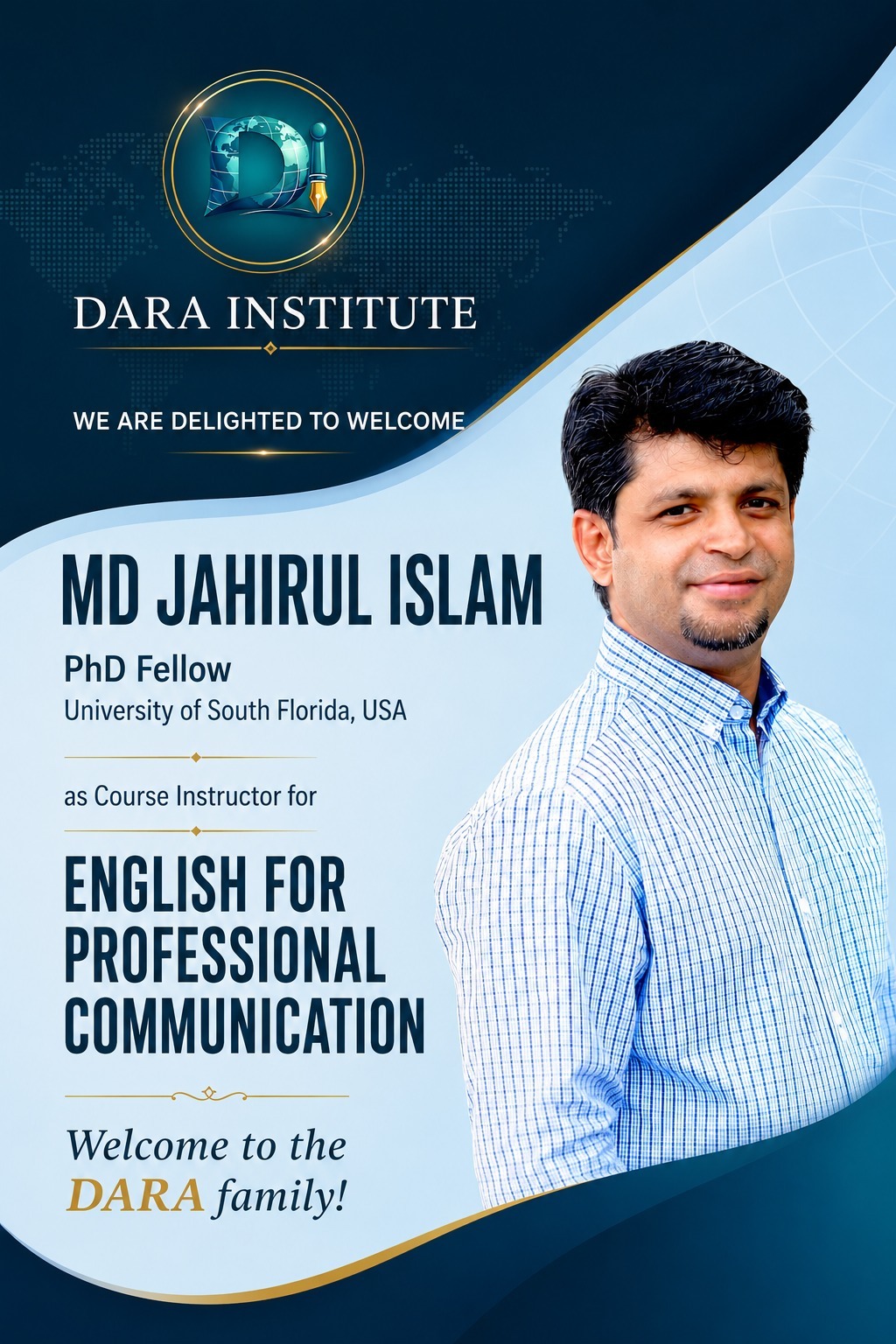
MD Jahirul Islam